Lamborghini Temerario: the Huracán’s 907-hp hybrid replacement
The Temerario replaces the Huracán with a twin-turbo hybrid V8 and 907 hp. Verified specs, US price and Car and Driver's test numbers.

The Lamborghini Temerario is the Huracán’s replacement, and it swaps the old V10 for a twin-turbo V8 with three electric motors. Combined output is 920 CV, or 907 hp, and Car and Driver measured 0-60 mph in 2.1 seconds. US pricing starts at $387,649.
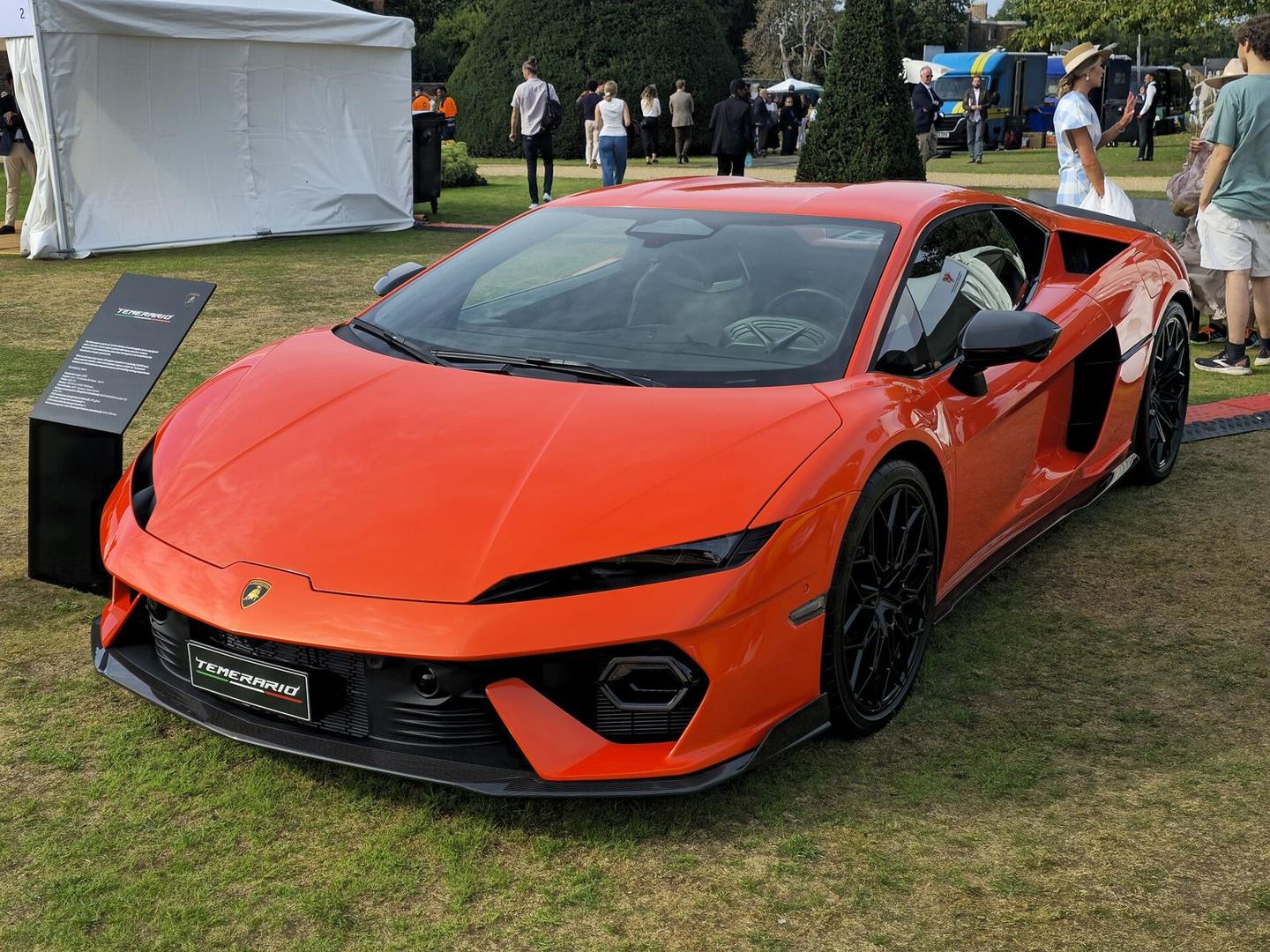
Losing the V10 hurts a little. It was one of the best-sounding engines on sale and a big part of why people stood next to Huracáns at car shows. The good news is that the new V8 revs to 10,000 rpm, so the Temerario is not exactly quiet about its arrival either.
Key specs
| Engine | 4.0L twin-turbo flat-plane-crank V8 plus three electric motors, AWD, 8-speed dual-clutch |
|---|---|
| Power | 907 hp (920 CV), 590 lb-ft combined; V8 alone 789 hp, 538 lb-ft |
| 0-60 mph | 2.1 seconds (Car and Driver tested); 0-62 mph 2.7 seconds, claimed |
| Top speed | 213 mph (343 km/h), claimed |
| Price (US$) | From $387,649 (Car and Driver listing) |
Lamborghini’s claims are marked as claimed. The 2.1-second figure is from Car and Driver’s instrumented test and omits a 1-foot rollout, which is their standard method.
Quick facts
- Car and Driver recorded a quarter mile of 9.4 seconds at 150 mph.
- The battery is a 3.8-kWh lithium-ion pack mounted in the center tunnel.
- Two electric motors drive the front wheels, and one sits between the V8 and the transmission.
- Car and Driver measured a curb weight of 4,199 lb.
- The V8 redlines at 10,000 rpm, according to Lamborghini and Car and Driver.
Pros and cons
Pros
- It is quicker than any Huracán, by a wide margin.
- A 10,000-rpm redline keeps it feeling special.
- All-wheel drive with front electric motors improves traction out of corners.
- The plug-in system allows short, quieter drives in town.
Cons
- The V10 sound is gone for good in this class of Lamborghini.
- At about 4,200 lb, it is heavy for a mid-engine supercar.
- Options push real-world prices far beyond the base figure.
Why it matters
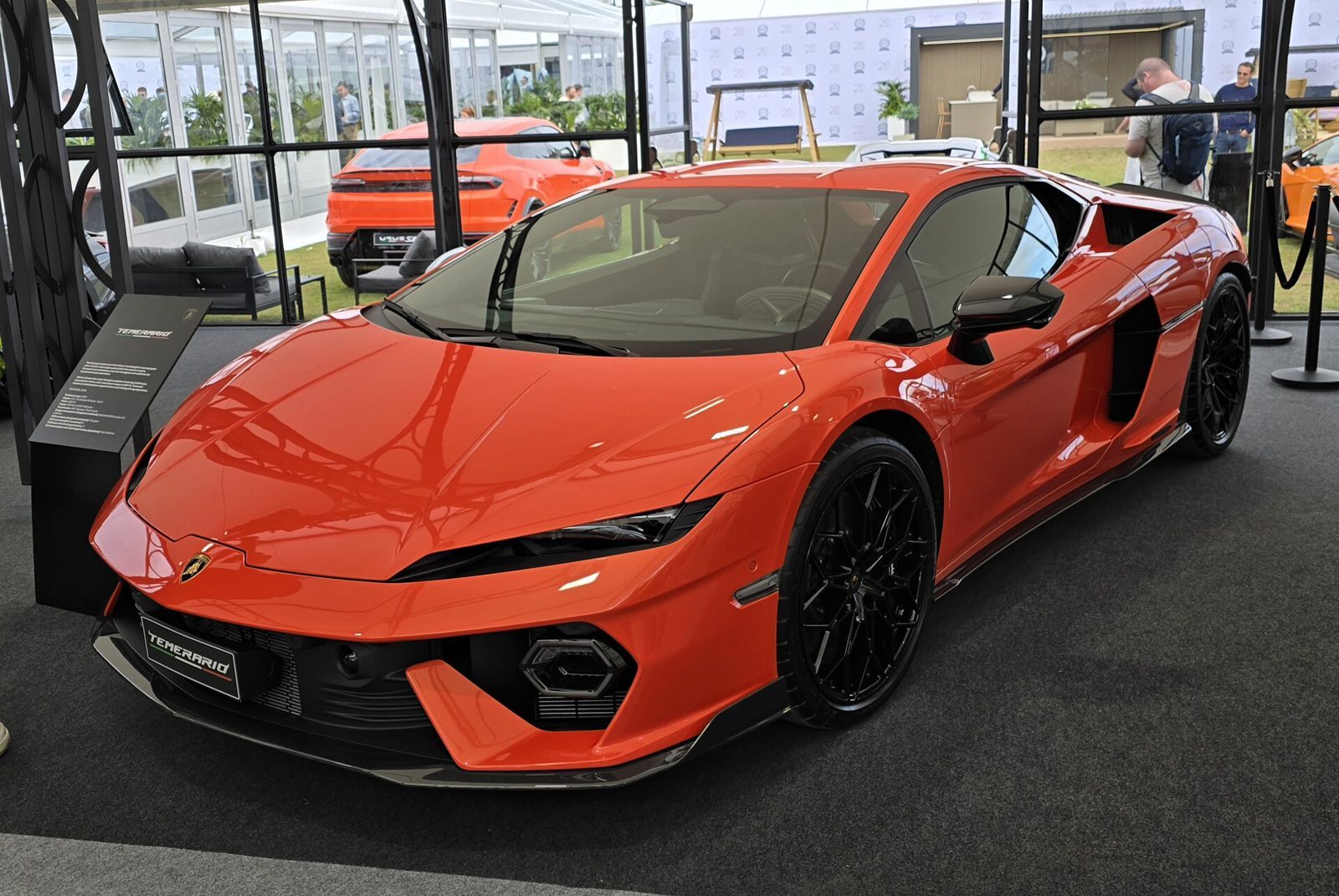
The Huracán sold in huge numbers by Lamborghini standards, so its replacement sets the tone for the brand’s most visible car. Most people who see a Lamborghini on the street will be looking at a Temerario for the next decade. If you have used our Lamborghini spotting guide, add the sharp hexagon details and the new nose to your list.
It also shows the trade-off every supercar maker is facing. Hybrid hardware adds power and lets the car pass emissions rules in Europe, but it adds weight. The Temerario’s answer is to make so much power that the weight stops mattering in a straight line, much like the Ferrari 849 Testarossa does at a higher price.
Who it is for
The Temerario is aimed squarely at buyers cross-shopping a Ferrari 296 GTB or a McLaren. Against the Ferrari it brings a bigger engine, with a V8 where the 296 uses a V6, and a lot of power from the hybrid system. It should also be a more usable daily car than the old Huracán Performante or STO, since the plug-in system allows shorter, quieter drives in town.
Spotters and photographers will see a lot of them. Lamborghini sold the Huracán in big numbers by supercar standards, and the Temerario fills the same slot in the range. If you have a favorite spot for shooting exotics on weekend mornings, expect the new car to show up there within its first year on the road, usually in a color that is impossible to miss.
How to photograph the Temerario
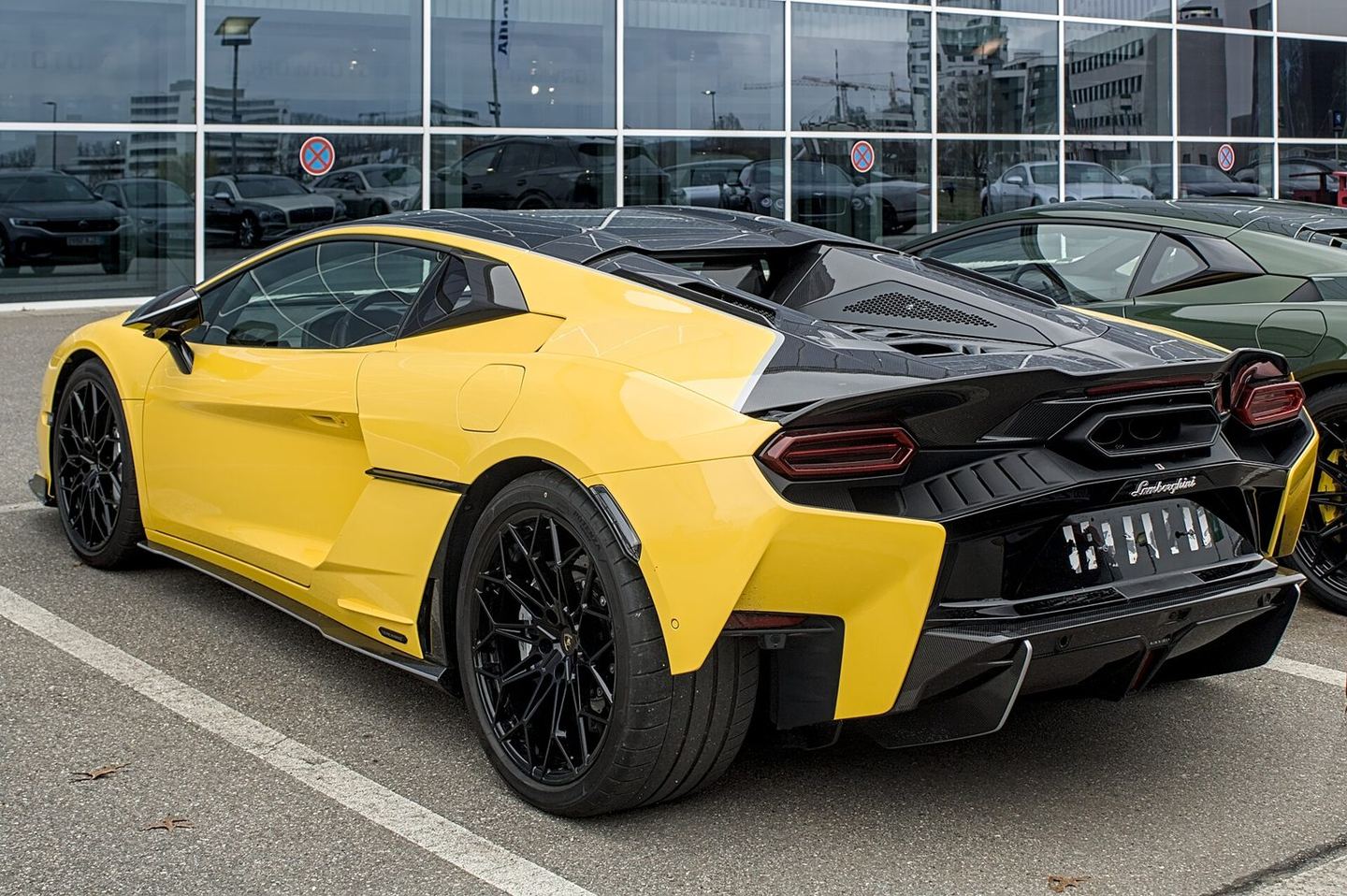
Lamborghinis look best from low angles. Get the camera close to knee height and use a 24mm to 35mm lens for the front three-quarter, but leave some room so the wedge shape is not distorted. Bright colors like green and orange can clip, so check your histogram before the owner drives off.
If you catch one on a canyon road or a track, shoot slightly ahead of the car so the sharp nose leads into empty space. The racing photo guide has advice on composition and timing for fast-moving cars.
Verdict
The Temerario is faster, more advanced and more complex than the Huracán. Car and Driver’s 2.1-second 0-60 mph result shows the hybrid system works, and the high-revving V8 keeps enough noise and drama to feel like a Lamborghini.
Purists will miss the V10. Everyone else gets one of the quickest cars in its class, with a redline that suggests Lamborghini still has a sense of humor.
Frequently asked questions
What replaced the Lamborghini Huracán?
The Temerario replaces the Huracán as Lamborghini’s smaller mid-engine supercar. It uses a twin-turbo 4.0-liter V8 and three electric motors instead of the Huracán’s naturally aspirated V10. Combined output is 907 hp, which is far more than any Huracán produced, and it sells alongside the larger Revuelto in the lineup.
How fast is the Lamborghini Temerario?
Lamborghini claims 0-62 mph in 2.7 seconds and a top speed of 213 mph. Car and Driver tested one at 2.1 seconds to 60 mph, with a 9.4-second quarter mile at 150 mph. Their figure omits a 1-foot rollout, which is standard for American magazine testing, so it reads quicker than the factory number.
How much does the Temerario cost?
Car and Driver lists the Temerario from $387,649 in the US. Their test car came to $605,749 with options, which shows how quickly the price rises. Lamborghini buyers often spend heavily on paint, carbon fiber and interior trim, so the base price is a guide rather than a typical transaction.
Is the Temerario a plug-in hybrid?
Yes. It has a 3.8-kWh lithium-ion battery that can be charged from an outlet through a 7.2-kW onboard charger, according to Car and Driver. The battery is small, so electric-only driving is limited to short distances. Its main job is to feed the three electric motors that add power and drive the front wheels.


