Aston Martin DB9: Design, Legacy and How to Photograph It
The Aston Martin DB9's story from its 2003 Frankfurt debut to the DB11, what to look for when you spot one, and a practical shot list for photographing its understated lines.

The Aston Martin DB9 is one of the most photogenic grand tourers of the 2000s: long hood, short rear deck, a front-mid V12 and almost no unnecessary lines. It’s also one of the hardest cars to photograph well, because its design depends on subtle curves that bad light and the wrong lens flatten out. This guide covers the car’s history and how to photograph it so the design comes through.
DB9 history in brief
Aston Martin unveiled the DB9 at the Frankfurt Motor Show in September 2003, and production ran from 2004 until 2016. According to Aston Martin, around 16,500 were built. It was the first car produced at the company’s Gaydon facility in Warwickshire, England, and the first built on its VH (vertical/horizontal) architecture, which used bonded aluminum construction. Power came from a 5.9-liter V12.
The “DB” prefix honors Sir David Brown, who owned Aston Martin from 1947 to 1972. The car’s design is credited to Ian Callum and Henrik Fisker. A convertible, the DB9 Volante, followed soon after the coupe, and the DB9 was eventually succeeded by the DB11 in 2016. Aston Martin’s own DB9 past-models page is the best place to confirm details of specific versions.
Why the name skipped DB8
The car was named DB9 rather than DB8 to signal a bigger step forward than a simple successor to the DB7. It’s a small detail that enthusiasts like to check when they see a caption.
How to identify a DB9
From a distance, the DB9 can be confused with the V8 Vantage, the DBS and early Rapide sedans, which share design language. Clues:
- Proportions: the DB9 is a 2+2 grand tourer, longer and more elegant than the compact V8 Vantage.
- Doors: Aston Martin’s swan-wing doors open slightly upward as well as outward, which helps clear curbs.
- Hood and grille: a clean hood and the classic Aston grille shape. The DBS has a more aggressive front with carbon fiber details.
- Updates: the DB9 received revisions over its life, including later front-end and wheel changes. When in doubt, caption it as “Aston Martin DB9” rather than guessing the model year.
- Volante: the soft-top convertible version.
Photographing a DB9: the principles
The DB9 doesn’t have dramatic scoops or wings. Its appeal is in the proportions and the long, smooth surfaces, and those only show up when the light runs along them.
Light first
- Soft, directional light from early morning, late afternoon or open shade gives smooth highlight lines along the fenders and doors.
- Harsh midday sun creates hot spots and makes dark paint look flat. If you have no choice, shoot in open shade.
- Use a circular polarizer to control reflections on the large windshield and glossy paint. Rotate it to keep a highlight line along the shoulder and remove distracting reflections elsewhere.
- Dark colors such as black and dark gray need extra attention: soft light, a clean background and careful exposure to keep detail.
Lens and distance
A wide lens close to a DB9 exaggerates the front and shortens the elegant rear. A standard to short telephoto lens (50-135mm) from further away keeps the proportions true. A longer lens (135-200mm) compresses the background and isolates the car. For a full breakdown, read the best lenses for car photography.
Height
Shoot most static images from about headlight to door-handle height. Too high and the car looks short; too low and the long hood dominates.
A DB9 shot list
If you have the chance to photograph a DB9 with its owner, a short plan keeps the session relaxed and productive. Start with the static hero images while the light is best:
- Front three-quarter view at headlight height, with the wheels turned so the wheel face points toward the camera.
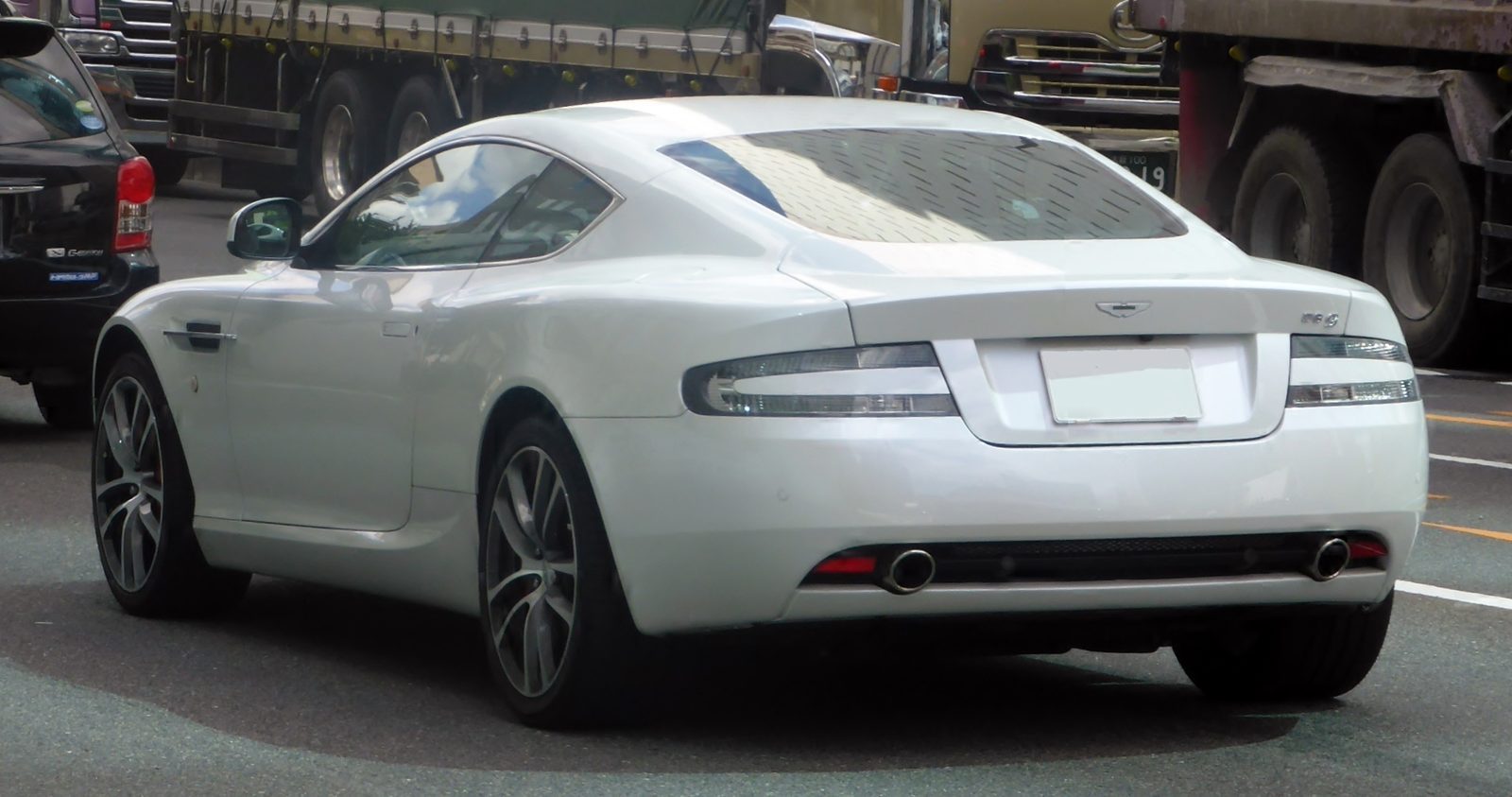
- Rear three-quarter view showing the haunches and the shape of the rear deck.
- A clean side profile with a short telephoto, centered and level.
- Swan-wing doors open, from a slightly raised position to show the movement.
- Interior from the open door: the dash, the center console and the seats.
- Details: the wings badge, the grille, the side strakes, the wheels and the tail lights.
- The V12 under the hood, if the owner agrees.
Finish with images that show the car as a grand tourer: parked at a viewpoint, at the start of a long road or with the doors open as if the journey is about to begin. Keep the backgrounds calm. A busy setting fights with the car’s understated lines, while open space lets them breathe.
Moving shots
A DB9 is built to cover distance, so moving images suit it well. A rolling shot on a quiet, scenic road, with the car at a steady legal speed and the camera car driven by someone else, captures it in its element. Use 1/60 to 1/125 sec for blurred wheels and background. Our guide on how to shoot rolling shots of cars safely covers the setup, communication and safety.
Practical tips on the day
- Bring microfiber cloths and a quick detailer, and ask the owner before touching the car.
- Check the paint for dust and fingerprints between setups; they show up clearly in soft light.
- Shoot a few frames with the lights on in the blue hour after sunset.
- Note the exact paint color so you can check it while editing.
- Keep zippers, belt buckles and camera straps away from the bodywork.
The DB9 in context
If you’re building a set of images or a story around the DB9, include its lineage. The DB nameplate runs back to the David Brown era, and the DB9’s successor, the DB11, continued the formula. Photographing a DB9 next to an older DB model or its successor at a meet makes a strong comparison image. Our guide to photographing at car shows explains how to make the most of a static display.
Frequently asked questions
When was the Aston Martin DB9 made?
The DB9 was unveiled at the Frankfurt Motor Show in September 2003 and produced from 2004 to 2016. Aston Martin says around 16,500 were built. It was replaced by the DB11.
Who designed the DB9?
The design is credited to Ian Callum and Henrik Fisker, working for Aston Martin.
What is the best lens for photographing a DB9?
A standard to short telephoto lens (around 50-135mm) from a moderate distance keeps the DB9’s long proportions accurate. Use a polarizer and soft light to bring out the curves.