Classic Car Portraits: Lighting, Locations and Storytelling
How to make portraits of classic cars that tell their story: choosing light, matching locations to the car's era, angles that flatter older designs, details and working with owners.

A classic car portrait is more than a photo of an old car. It shows the design, the era and, ideally, something of the car’s history and its owner. Classic cars have a different presence from modern ones: more chrome, thinner pillars, rounder shapes and often a well-worn interior full of character. Good portraits respect that. This guide covers light, locations, angles and storytelling.
Light
Golden hour and blue hour
Low sun after sunrise and before sunset gives warm, directional light that suits classic cars, emphasizing curves and giving chrome a warm glow. Just after sunset, blue hour brings soft, even light and a cool sky that works well with warm interior lights and headlights.
Overcast days
Clouds act like a large softbox. Reflections become smooth, shadows soft and dark paint easier to photograph. Overcast light suits detail shots and dark cars especially well.
Midday sun
Hard midday sun is the most difficult light: harsh reflections, bright highlights on chrome and dark shadows under the car. If you have to shoot at midday, find open shade, such as the shadow of a building or trees, or focus on interiors and details.
Polarizers and reflections
A circular polarizing filter is essential. Rotate it to control reflections on glass and paint. Be careful with chrome: removing all reflections can make it look dull. Aim for a balance.
Locations that match the car
The location tells part of the story. A few approaches:
- Period locations: a diner, an old gas station, a main street with historic buildings, or a mid-century house for a car from the same era.
- Contrast: a classic car in a modern architectural setting can make both stand out.
- Nature: country roads, deserts, forests or coastlines suit touring cars and convertibles.
- Industrial: warehouses, old factories and brick walls suit muscle cars and hot rods.
- The garage: a car in its own garage, with tools and memorabilia, shows the owner’s relationship with it.
Always check that you’re allowed to use a location, especially private property. Some public places require a permit for organized shoots; check with the local authority if you plan a larger production.
Historic photos can be a great source of inspiration for locations and compositions. The Library of Congress has a free collection of historic car photos that shows how cars were photographed in their own time.
Angles that flatter classic designs
- Front three-quarter: the most classic angle, showing the front and the side.
- Low camera height: around headlight height gives a powerful look. Lower still for dramatic images.
- Side profile: for long, elegant cars, a clean side profile shows proportions.
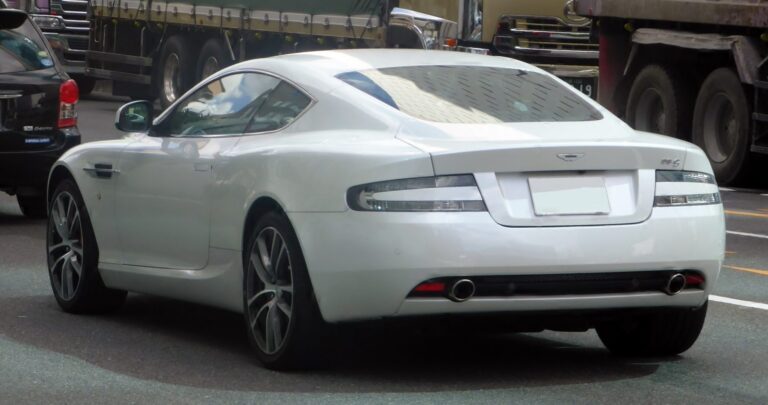
- Rear three-quarter: for cars with distinctive tails, fins or taillights.
- Turned front wheels: point the face of the wheel toward the camera.
Use a focal length of 50mm or longer for full-car images to avoid distortion. Wider lenses work for interiors and dramatic close-ups. Our guide to the best lenses for car photography covers the trade-offs.
Details that tell the story
Classic cars are full of details worth photographing:
- Badges, emblems and hood ornaments.
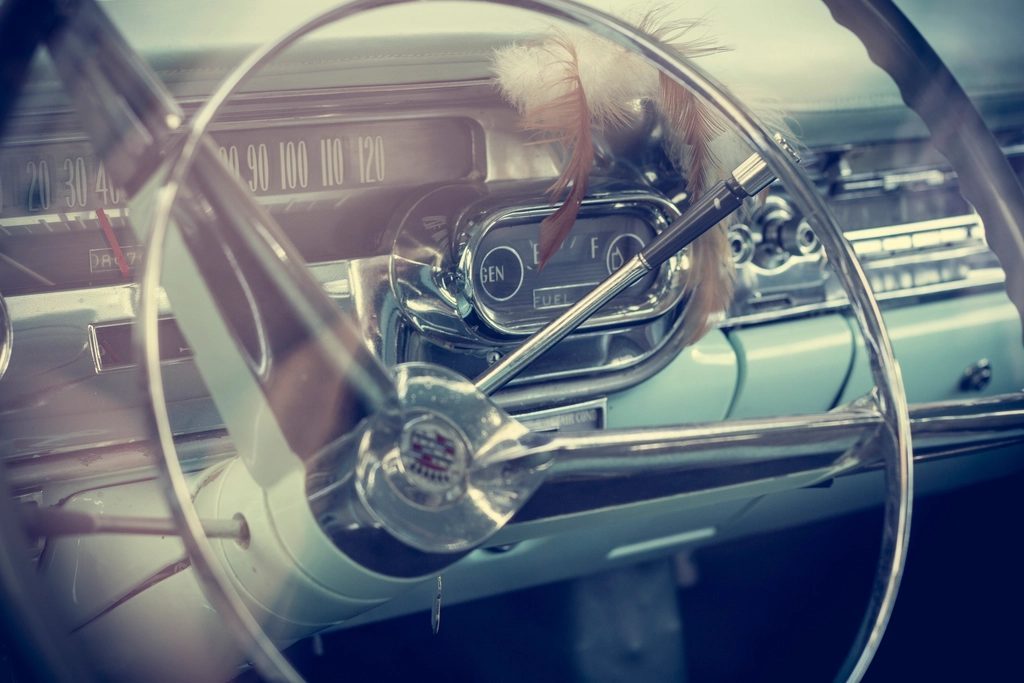
- Dashboards, gauges, steering wheels and switches.
- Upholstery and its wear.
- Original paperwork, service books and period license plates.
- Engine bays.
- Patina: worn paint, faded chrome and small imperfections that show age.
Detail shots add depth to a series and are useful when the location or light doesn’t suit a full-car image. For more on telling a car’s history, read capturing timeless memories with classic car photography.
Working with the owner
Classic car owners often know every detail of their car’s history. Talking to them before you shoot gives you ideas for images that matter to them: a restoration detail, a family story, a part that was hard to find.
- Agree on where the car will be driven and parked.
- Ask before touching the car or opening doors and the hood.
- Ask if they’d like to appear in some images.
- Share a selection of images afterward.
Planning the shoot
Classic cars need a bit more care than modern ones. Many don’t like long idling, heat or rain, and some owners avoid driving on gravel or wet roads. Plan with that in mind:
- Scout the location in advance, ideally at the same time of day as the shoot, to check the light and the background.
- Check the weather and have a backup date.
- Keep driving between positions short, and let the owner do the driving.
- Bring microfiber cloths and quick detailer for last-minute dust and fingerprints, but ask before touching the paint.
- Make a shot list: the hero angle, side profile, rear, interior, engine and a handful of details.
A shot list keeps the session efficient, so the car spends less time waiting in the sun and you leave with a complete set.
Adding motion and night shots
A portrait doesn’t have to be static. A classic car driving along a quiet country road can be the strongest image in a series. Read how to shoot rolling shots safely for the technique. At night, light painting can give a classic car a studio look on location; see our guide to light painting cars.
Editing classic car portraits
Editing should support the car, not overwhelm it.
- Correct white balance carefully, especially for original colors that owners care about.
- Use local adjustments to brighten interiors and shadows.
- Remove distractions such as litter or signs, but don’t alter the car itself.
- Consider black and white or a subtle film look for older cars, but don’t overdo it.
Frequently asked questions
What is the best time to photograph a classic car?
The hour after sunrise and before sunset, or an overcast day. Both give soft light that suits curves and chrome.
What lens is best for classic car portraits?
A 50mm or longer for full-car images to avoid distortion, a 24-70mm zoom for flexibility and a wider lens for interiors.
How do I photograph chrome without harsh reflections?
Use soft light, a circular polarizer and careful positioning so the chrome reflects something clean, such as the sky or a plain wall.
Where can I find good locations for classic car photos?
Look for places that match the car’s era, such as diners, old gas stations, historic streets and mid-century buildings, or quiet country roads. Always check permissions first.